Lessons from 32+ podcast interviews
My book should be available for preorder any second. In between hitting refresh at the Barnes and Noble website, I've been thinking about my experience as a guest on 32+ podcasts.
In an attempt to find my readers, I launched into the world of podcast interviews. If you're curious, here’s the most complete list of the podcasts I’ve been on so far https://www.katierizzo.com/media.
Thirty-two plus podcasts later, here is what I learned about podcasting, interviews, and about myself:
WHAT I LEARNED ABOUT PODCASTS
PODMATCHING IS A BUSINESS
There are entire companies that join guests to podcasts. I joined Podmatch.
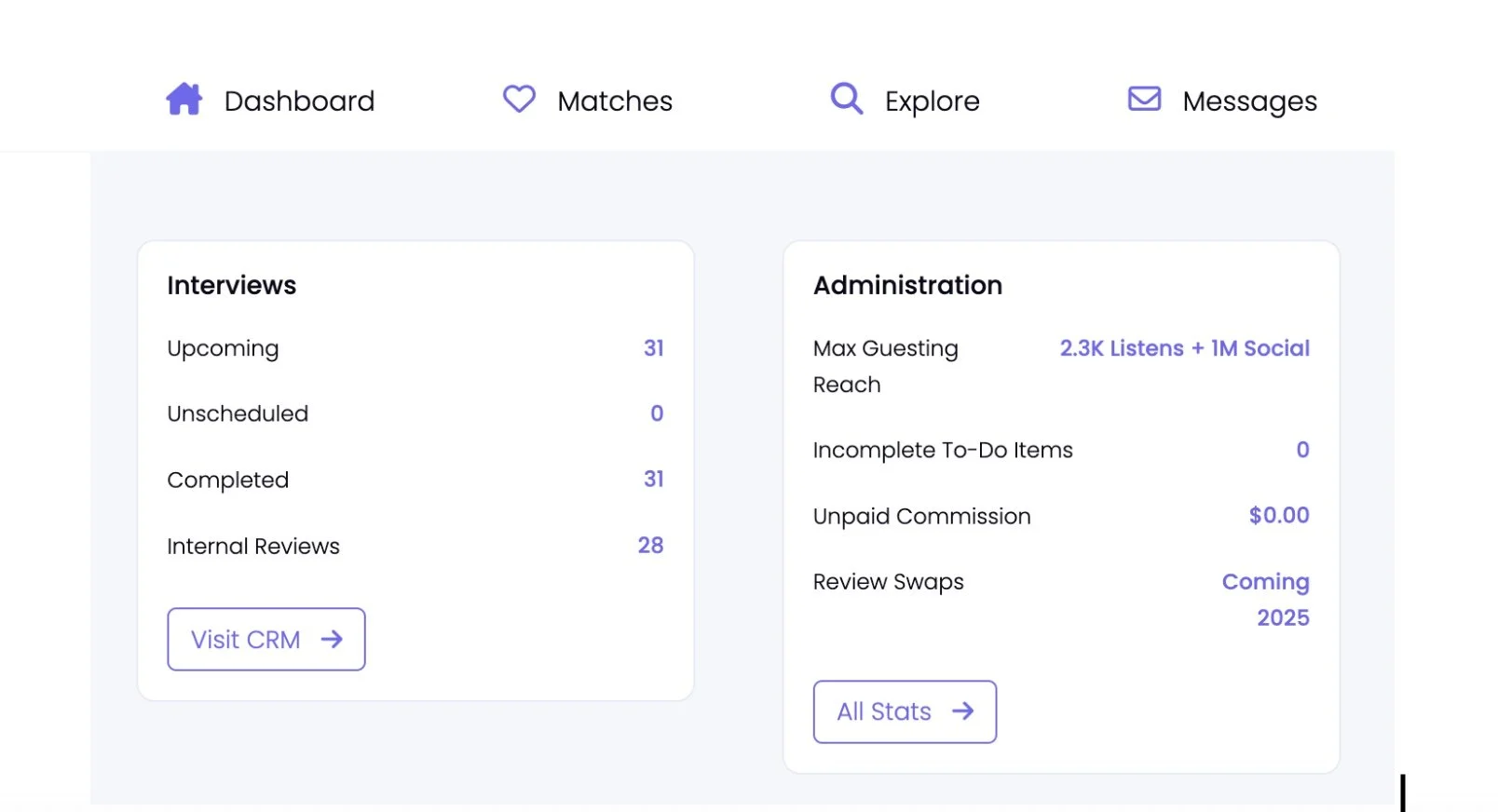
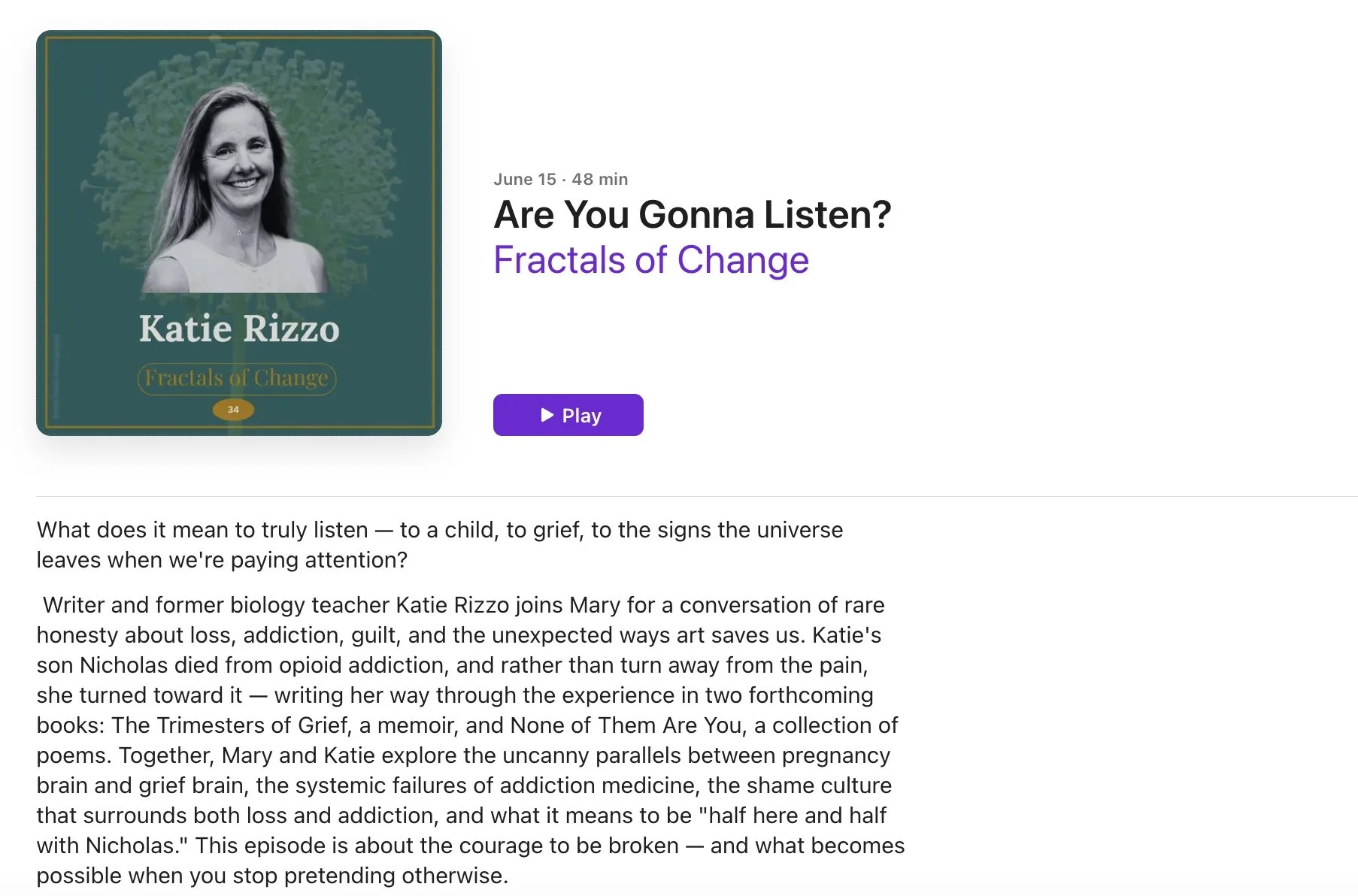
Podmatch feels like a dating site. The algorithm matched guests with hosts. Both of us could decide if we wanted to interview. Some podcasters read my book before interviewing me (shout out to Fractals of Change and The Grief Lounge), some required pre-interviews, while others started taping without any introduction.
PODCASTING IS LIKE DIETING - VERY FEW ACCOMPLISH WHAT THEY SET OUT TO DO
Lots of podcasts begin with great intentions only to record a few episodes and then stop. According to podnews, “Many industry sources report that 90% of podcasts don’t make it past three episodes. Of the 10% that do make it past three episodes, 90% of those podcasts don’t make it past episode 20.”
There were more than a few podcasts that pre-interviewed me, and then didn’t show up. Their podcast remains stunted at 1 to 5 shows.
I NEEDED BOUNDARIES
Just as with dating sites, I met ‘creepy’ people who wanted money to go on their podcast, or offered something I didn’t need for a ‘small fee’ of thousands of dollars. My marketing coordinator, Hannah Tonsor at Koehler, warned me early on that there are lots of people out there trying to make money off new authors.
BEING OPEN
On Podmatch, I met extraordinary, passionate people and found some deep connections only by stripping everything away. In fact, one of the podcasts I went on was called Let’s Get Naked. The host, Anne Karber, taught me that using your passion to deliver a message can make someone wildly charismatic.
DISCUSSIONS HAVE TO GO TWO-WAYS
The memorable podcasts are ones where the interviewer shared her/his experiences - like when Mary Schaub in Fractals of Change shared what she hides from the world, I was brought to tears. Or when Rebecca Mullen in Habits for Your Happily Ever After shared that she was filming just across the street from CMU, the college my son, Nicholas, attended. I could almost believe Nicholas set up the interview from beyond the veil. Sadie Rowbottom reminded me of the similarities in grief between her, a woman who lost her husband, to me, a mom who lost my child. There were more than a handful of times where I left a podcast wishing the host was my neighbor.
For some reason, there are a bunch of new podcasts coming out of Africa and the Middle East. I met at least five young earnest people whose English wasn’t their first language. All of whom stated that podcasting was a way for them to learn more about the world. In Born Without A Choice, I wondered what I had to offer someone who said he’d never experienced grief. Which kind of makes me sad to think that these young kids might only know people from North America, as new authors hustling their books.
HEALING THROUGH (*over*) SHARING
Is a part of healing putting it out there into the light? Talking to a captive audience (of one) who asked great questions was almost always a positive experience. As Harvard professor Leslie John said, “oversharing is an accelerant to relationships” (from The Armchair Expert, Revealing: The Underrated Power of Oversharing).
PODCASTS HAVE FLAVORS
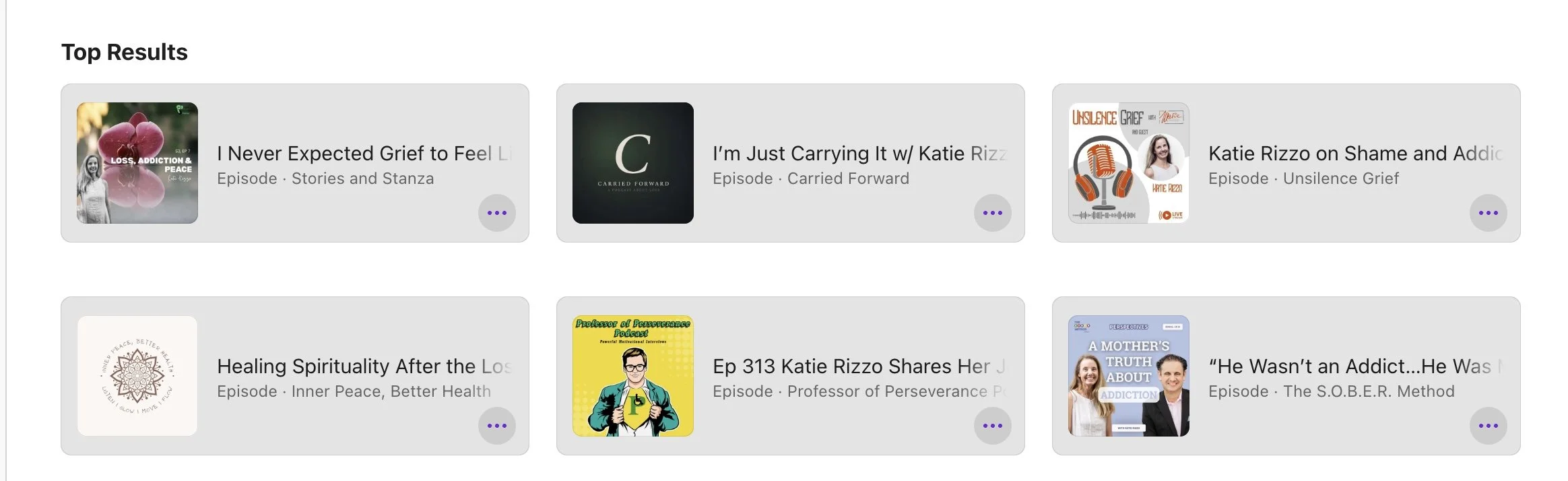
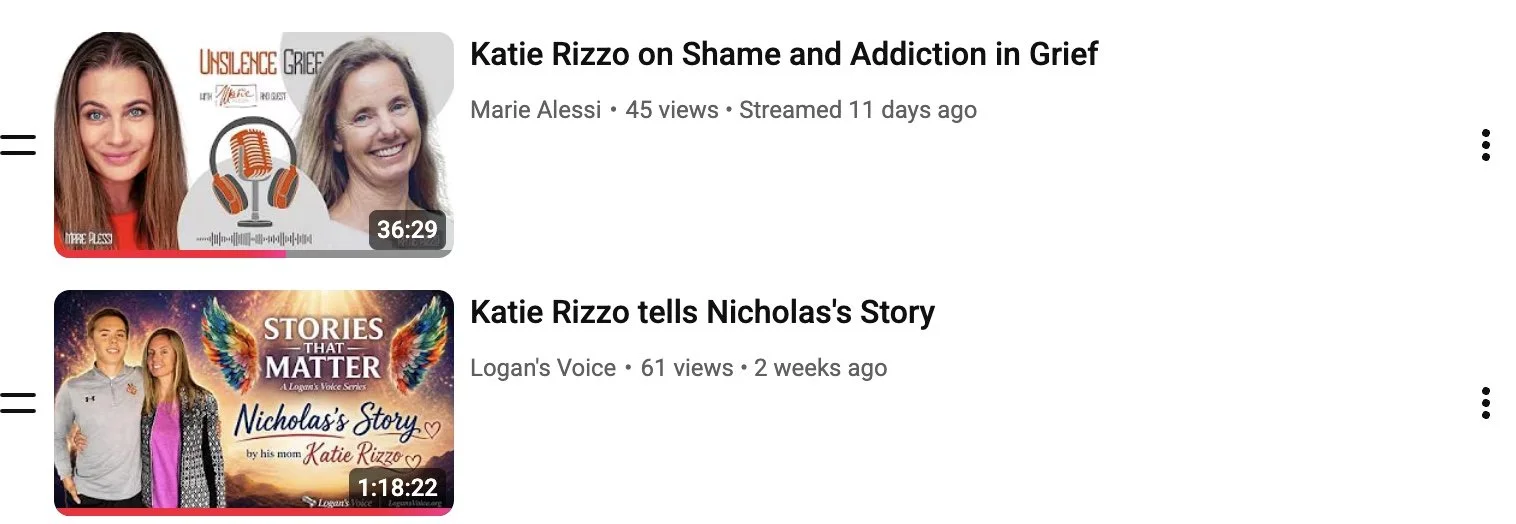
Stories and Stanzas felt like a work of love. The S O B E R Method focused with laser-like precision on addiction and tools to help those get sober. Marie Alessi’s Unsilence Grief was a deep dive with a really great therapist. Similarly, in Carried Forward, an interview with a fellow griever, and therapist, I wondered about the differences in grieving between men and women.
Logan’s Voice, a podcast by a fellow parent griever, could have broken my heart. The Parent Tap walked the line between seeing me as a person and a parent’s worst nightmare. Ms. Nichol on The Overcomers Approach and I shared about our joint humanity.
Each interview felt like I’d found a way to intensify friendship. Trauma Anonymous and I bonded over AA and Al-Anon phrases. Living the Dream with Curve Ball reminded me to not say why me, but rather why not me. And in The Wellness Hub, I felt seen as a mother.
WHAT I LEARNED ABOUT INTERVIEWS
Before I started as a guest, Kari Wells (the author and TV personality) suggested I subscribe to MasterClass and immerse myself in lessons on public speaking. Not only was she right, but also what I learned made me a happier person.
HAVE A MESSAGE
Al-Anon and MasterClass agree on the importance of a clear message. When I’ve made my message clear, and am unified in my purpose, my life and podcasts run smoother. My messages are:
The shame around addiction keeps people sick and isolated,
80,000 people died the same year Nicholas died, which is equal to one commercial plane going down EVERY DAY - this is a crisis
The addiction treatment is costly and - as the 70-90% relapse rate for opioid addiction proves - it isn’t effective.
Drug companies, insurance companies, and rehab companies are the only ones that win in the addiction game. We’ve let the free market mow over humans.
Oh, and I’d love it if people bought my book.
GIVE GRACE
People asked questions that I’d answered already. I knew the worst thing I could do was to state the obvious and say, “Asked and answered.” One time, I went through all three trimesters of grief with examples, and the next question was - “Can you tell us about the trimesters with examples?” And, because I’ve asked my husband the same question before - especially something like what time do we leave for the airport - I remembered to give the interviewer some grace and answered the question in a different way.
Sometimes I’d get lost answering a question. Although a tangent sometimes sounds like a great idea in my head, lots of times I’d go down a trail and get lost. Speaking about complex matters is a skill. I had to find grace for myself more than a few times.
WHAT I LEARNED ABOUT MYSELF
WHO AM I?
Some people responded to me in confusing ways. This forced me into a period of looking at myself: am I a people pleaser, or do I care more about my message?
I learned that I make mistakes, and that’s okay. I say “um” a lot and “yeah.” One podcast that never aired asked me to close all my tabs. She said things in the background changed the upload speed. Then, she asked me to send her my bio in the chat. I quickly typed something and accidentally typed the wrong year of Nicholas’s death. At the end of the interview she said, “You know it has only been a few weeks, be gentle with yourself.”
I learned that other people see me as they are.
Many times I’d end an interview and ruminate on their responses. I heard: “You’d better watch your other kids,” or “Let me tell you how I parented and it worked out,” or “You’re early in grief, it gets better,” or “How do your other children feel about you writing poems to your dead son all the time?” I have to believe that Eleanor Roosevelt is right when she said “What other people think of me is none of my business.”
After thirty podcasts, I started feeling a little narcissistic. Who talks about themselves this much?
